
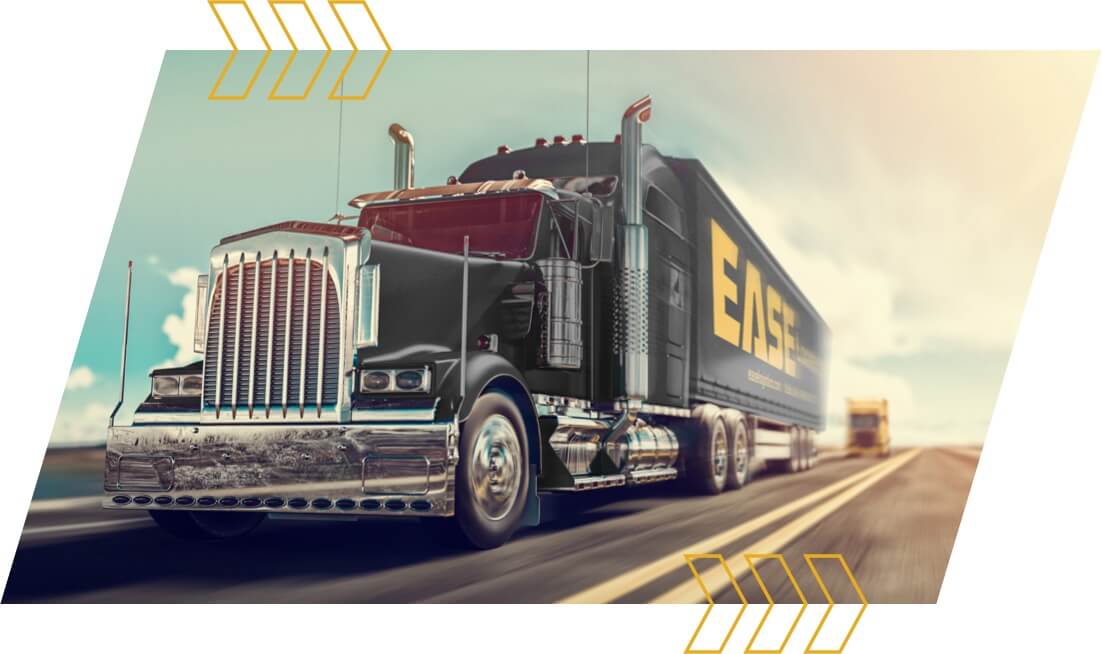
Reefer trucking is full truckload freight moved in a refrigerated trailer that actively manages temperature in transit, rather than simply insulating the load. For food and beverage shippers, it’s the difference between freight that arrives sellable and freight that arrives spoiled.
What Reefer Trucking Actually Does
A standard dry van trailer protects freight from weather and theft, but it does nothing to control temperature inside the box. A reefer trailer runs a refrigeration unit that holds a set temperature range for the entire trip, adjusting for outside conditions, door openings, and load density. EASE runs FTL Temp-Controlled service across a range that spans -20 to 70+ degrees, which covers everything from frozen product to climate-sensitive goods that need to stay cool without freezing.
That range matters because “temperature-controlled” isn’t one setting. Frozen seafood, fresh dairy, and temperature-sensitive beverages all have different tolerances, and a provider running a single default setpoint across every load isn’t actually managing temperature. They’re managing an average.
Why Temperature Control Is Non-Negotiable in Food and Beverage Freight
The cost of a temperature failure isn’t a discount or a claim. It’s a load that can’t be sold. Retailers and wholesale partners don’t accept product that’s been out of spec, and a pattern of temperature-related rejections puts the underlying relationship at risk, not just the individual shipment.
That risk is concrete, not theoretical. Temperature and timing failures compound: a load that’s both late and out of range doesn’t get a second chance with a retail buyer.
What a Real FTL Temp-Controlled Program Looks Like
A reefer program worth relying on has a few things in place beyond “a truck with a refrigeration unit.”
Dedicated equipment and driver familiarity. Drivers running temperature-controlled lanes regularly know the pre-trip checks, the loading sequence that protects airflow, and what to do if a unit shows signs of trouble mid-route.
- Response time that matches the urgency of perishable freight. EASE’s standard is a two-minute initial response and a 15-minute quote, which matters more for a reefer load with a tight shelf-life window than it does for freight that can wait a day.
- Capacity that doesn’t disappear during peak seasons. Beverage and produce shippers know that reefer capacity tightens seasonally. A provider without depth in a dedicated or vetted carrier network will be the first to tell a shipper “no trucks” exactly when it matters most.
- Warehousing that matches the trucking. Cold chain freight that has to sit, even briefly, needs FDA-certified, temperature-appropriate storage, not a general-purpose dock.
Reefer Trucking vs. Standard Dry Van: When Each Makes Sense
Not every food and beverage shipment needs a reefer trailer. Shelf-stable packaged goods, canned products, and most dry ingredients move fine in standard dry van service, and paying for temperature control on freight that doesn’t need it is a cost with no benefit.
The decision point is shelf life and temperature sensitivity, not category. Some beverages are shelf-stable and dry van-appropriate; others require active cooling from production through delivery. Manufacturers running both should look for a provider that offers both modes under one program, since splitting a supply chain across separate dry van and reefer vendors adds coordination cost with no upside.
Need reefer capacity that won’t disappear during peak season? Get a quote from EASE for a temperature-controlled program built around your product, not a generic setpoint, backed by dedicated carrier capacity.
Frequently Asked Questions
What temperature range can reefer trucks maintain?
A capable FTL Temp-Controlled program can typically hold a range from around -20 to 70+ degrees Fahrenheit, covering frozen, refrigerated, and climate-sensitive freight. The specific setpoint should match the product, not a generic default.
How is reefer trucking different from standard refrigerated shipping?
“Reefer trucking” and “refrigerated shipping” generally describe the same thing: full truckload freight in a trailer that actively manages temperature in transit, as opposed to a dry van that only protects against weather and theft.
What happens if a reefer unit fails mid-transit?
A provider running a real cold chain program has monitoring in place to flag temperature deviations quickly and a response process for it, rather than discovering the failure at delivery. Ask any prospective broker what that process actually looks like before committing volume.
Do I need reefer trucking for all my food and beverage freight?
No. Shelf-stable, non-perishable products typically move fine in a dry van. Reefer is for freight where temperature control affects safety, quality, or shelf life.
 ?
?