
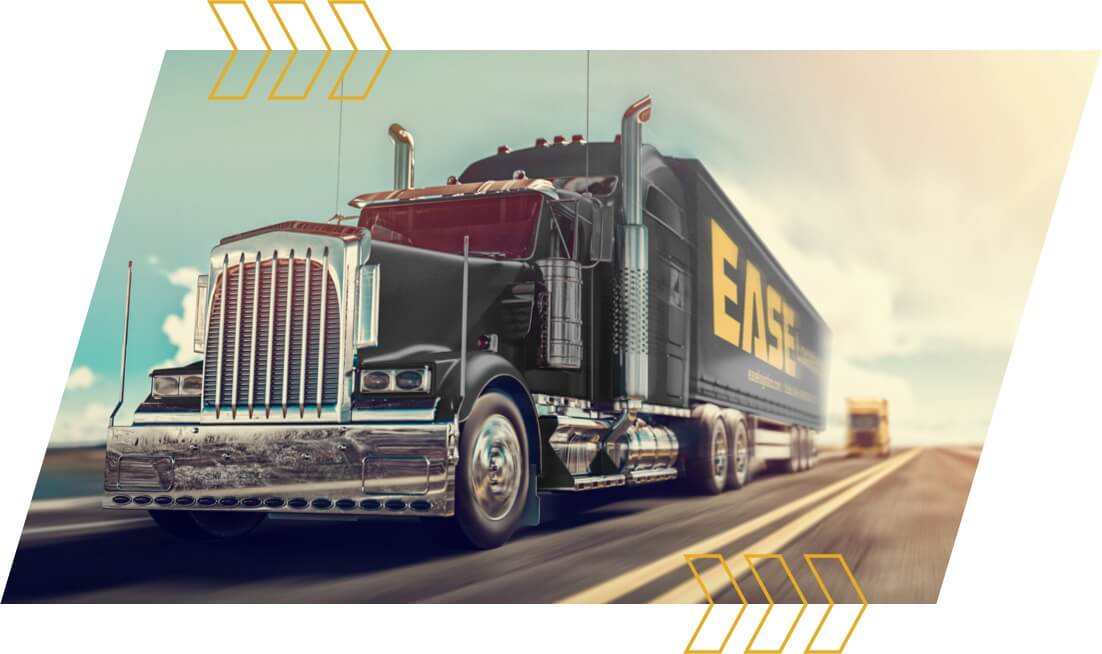
As food and beverage manufacturers scale, their supply chains become more complex. New retail partnerships bring stricter delivery requirements, expanding distribution networks create more moving parts, and the pressure to protect margins increases. What worked when shipping volumes were smaller may no longer be enough to maintain service levels, meet retailer expectations, or support continued growth.
The right food logistics company does more than move freight from one location to another. It helps manufacturers manage that complexity through reliable capacity, proactive communication, consistent performance, and greater visibility across their operations. But how do you know when your current logistics provider is keeping pace with your business, and when it’s time for a different approach?
In this guide, we’ll explore what growing manufacturers should expect from a food and beverage 3PL, the warning signs that a logistics partnership is falling short, and when more integrated logistics solutions can help support the next stage of growth.
What should a food and beverage 3PL do as you grow?
The short answer is your 3PL should scale with you. Early on, that means reliable capacity and on-time delivery. As volume and customers multiply, it means holding delivery windows, reporting without being asked, and taking coordination off your team.
For food and beverage, the basics are specific. You need temperature-controlled and dry van capacity under one roof, storage that meets FDA expectations, and a team who answers at 2 a.m. when a reefer load is late. EASE’s food and beverage services include temperature-controlled equipment from -20 to 70+ degrees, FDA-certified and registered storage facilities, retail consolidation, and freshness retention.
What makes a good logistics provider for food and beverage companies?
There are four key things you can test:
- Equipment range. Can one provider handle both dry van and temperature-controlled freight? Splitting them across providers doubles your coordination.
- Dock discipline. Does the provider plan around each receiver’s window, or treat every dock the same?
- Speed. Our average response time is two minutes, with 24/7/365 access to an EASE team member. Ask any other provider if they can match this.
- Reporting. Do you get visibility into reporting and shipment updates, without chasing them?
If your product is short-dated, add two more questions. Ask how the provider handles retail consolidation, which keeps partial trailers off long hauls, and freshness retention, which protects code date through the whole trip. Then ask what it does when a delay threatens a window.
What are the signs your food logistics company is falling behind?
There are five signs that show up as indications your logistics provider is falling behind before most shippers decide to change anything.
- Your team is the integrator. Freight, storage, and carrier relationships sit with different providers, and your people spend the week coordinating them.
- Your reports never line up. Transportation, warehouse, and carrier updates arrive separately, so nobody sees a shipment’s full path.
- Reviews never get past the lane list. You talk about this week’s loads, and never about service, compliance, or next year.
- Your scorecards slip and nobody owns the fix. Retailer or wholesaler scores trend down, and no one outside your own team is accountable.
- Peak season surprises you. Surge capacity gets figured out in the moment, no pre-planning. If that sounds familiar, our infographic 5 Ways to Survive a Food & Beverage Supply Chain Surge is a good place to start.
One sign usually means a fixable problem inside the current setup. Three together mean the provider was built for an earlier version of your business.
What does growth look like when it goes right?
This needs an intro to set up the two different success stories.
A disruptive performance beverage brand was scaling fast, from 80,000 cases in year one to a projected 2 million-plus cases. EASE provided nationwide capacity, blending asset and partner fleets, warehouse positioning near production for faster transit, and end-to-end fulfillment for retail, e-commerce, and stadium distribution. The brand also got real-time visibility, proactive communication, and daily performance reporting. Read the full fast-rising beverage brand case study.
A leading national sports drink brand faced declining service scores with one of its largest wholesale partners. Under EASE’s single-source logistics model, service scores rose from 88.5% to 98.5%, exceeding internal KPIs. Retail shelf presence was secured, the wholesale relationship was preserved, and penalties were reduced. Read the national sports drink case study.
When does a food and beverage 3PL need to take on more?
A food and beverage 3PL requires integrated solutions. Managed 3PL covers transportation execution, carrier network management, route optimization, and custom portal visibility. Our 4PL Solution adds supplier coordination, vendor management, RFQ management and execution, and EDI and API integration.
You do not have to hand everything over, ur partial outsource solution lets you start with the piece causing the most coordination work and widen the scope as results show. Our guide to managed 3PL for food and beverage covers the partner-versus-broker question.
What does it look like to switch food logistics providers?
Switching your food logistics provider is easier than you think, if you do it in a controlled fashion.
- Pick one lane or one function. Choose the piece causing the most coordination work, not the one that looks easiest.
- Baseline the scorecard. Write down current service scores, on-time performance, and any penalties before anything moves… and then do what with it?
- Provide receiving windows and requirements. Temperature settings, appointment rules, and retailer routing guides should go to the new team on day one.
- Set your alert thresholds. Agree on alert thresholds. Decide which delays and missed appointments should trigger an alert, and who receives it, so exceptions reach the right person fast.
- Review against the baseline. Then widen the scope when the numbers hold.
Everything else stays with your current providers, so there is no all-at-once cutover. Our partial outsource solution is designed for this approach.
Frequently Asked Questions
What does a food and beverage 3PL do?
A food and beverage 3PL moves and stores food and beverage freight for a shipper. That includes temperature-controlled and dry van transportation, storage, and the planning and proactive communication that keep freight on schedule. At EASE, that also includes retail consolidation and freshness retention.
Which logistics providers offer both dry van and temperature-controlled options?
EASE does. We run dry van and temperature-controlled equipment from -20 to 70+ degrees, so you can keep one provider across all freight types.
How do I know my food logistics company is no longer keeping up?
Look for a team that coordinates providers more than it manages freight, reports that do not connect, slipping retailer scorecards with no clear owner, and peak seasons handled on the fly. Two or three of those together usually mean it is time for a different level of partner.
Getting More From Your Food Logistics Provider
The right food logistics provider grows with your volume, holds your delivery windows, and tells you what is happening before the receiver does. To see how we would handle your food and beverage freight, contact us or explore our food and beverage services.
 ?