
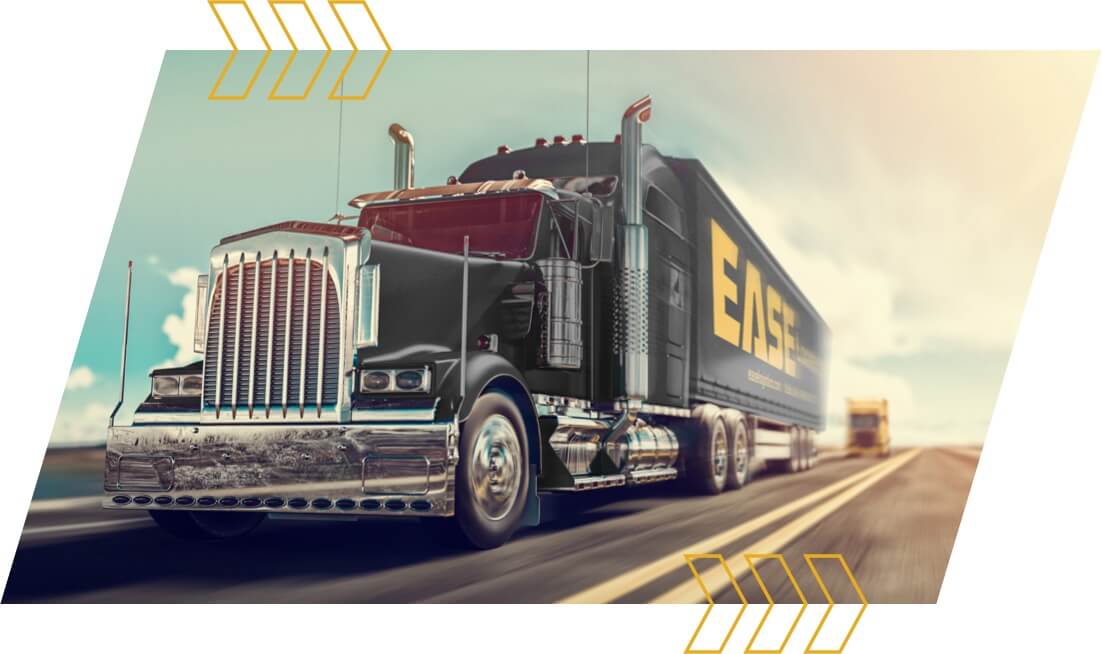
Most conversations about automated trucking are still hypothetical: what the technology might do, when it might arrive, how it might change freight. Against a backdrop of automotive freight volumes that grew 2.8x year over year between March 2025 and March 2026, the automated trucking conversation is no longer hypothetical in central Ohio. EASE, a 4PL automotive logistics provider, has been testing autonomous trucking technology in live freight operations on Interstate 70 since April 2025, and expanded that program again in 2026 with its third deployment, running fully driverless, electric trucks.
This isn’t a demo. It’s freight moving between Ohio and Indiana every day, with real production data going back to regulators who are deciding what automated trucking rules look like nationally.
What Is the I-70 Truck Automation Corridor?
The I-70 Truck Automation Corridor is a 166-mile automated trucking initiative running from Columbus, Ohio to Indianapolis, Indiana, built through a partnership between DriveOhio, the Ohio Department of Transportation (ODOT), and the Indiana Department of Transportation (INDOT), with Kratos Defense and Security Solutions supplying the “Leader Follower” platooning technology that powers the program. The system electronically links two trucks: a human driver controls the lead vehicle, and the follower truck automatically matches its speed and steering, reacting in roughly 300 milliseconds compared to a human reaction time of 1.5 to 2 seconds. A safety driver remains in the follower truck at all times, able to take manual control instantly, and operates that truck normally whenever it isn’t in platooning mode.
EASE began running the program on I-70 between Columbus and Indianapolis in April 2025, after 260 hours of driver training and a deliberate “Crawl/Walk/Run” rollout. Professional drivers are present in both cabs throughout every run and can take manual control at any point. A purple light on the cab signals platooning mode to highway patrol, and the trucks operate across a range of weather and lighting conditions. According to Forbes, EASE is “the only over-the-road fleet in the USA operating a truck platoon on the highway” (Forbes, 2025). That initial phase ran on an $8.8 million U.S. Department of Transportation grant, fed data directly into national automation guideline development, and wrapped earlier this year.
From Platooning to Driverless: EASE’s Third Automated Deployment
In May 2026, EASE, DriveOhio, ODOT and INDOT announced a third phase of the program: two SAE Level 4 autonomous electric trucks from Einride that have no cab at all, not just no driver in one. These vehicles run under remote monitoring and will operate as a shuttle between EASE’s two warehouses in central Ohio and the connecting public roads starting fall 2026, with some test runs carrying live, revenue-generating freight, generating operational data on freight movement, safety performance, and uptime as they run.
“These deployments move autonomous trucking from controlled pilots into daily freight operations, where safety, reliability, and efficiency can be evaluated,” said EASE President & CEO Peter Coratola Jr. in the announcement. The distinction matters: this is EASE’s third automated deployment on the corridor, and the shift from a human-supervised platoon to a fully driverless vehicle is a meaningfully bigger step than most fleets have taken publicly.
Why This Matters for Automotive Shippers, Not Just Technologists
Automated trucking headlines tend to focus on the technology. For a Tier 1 supplier or OEM running JIT freight through Ohio’s automotive corridor, the more relevant question is what this work is actually testing: multi-state regulatory readiness, driver-in-the-loop safety performance under real highway conditions, and whether automation can hold up on the same lanes carrying today’s production freight, not a closed test track.
The I-70 program’s stated goals include introducing practical automation experience to trucking companies, sharing field insights across state lines, and identifying regulatory and operational obstacles before automated freight becomes a mainstream capacity option. For now, the practical value for shippers is early exposure, not lower rates: the corridor’s largest automotive shippers get a ground-level view of where automated capacity is headed from a provider already running it, not reading about it.
What to Watch For Next
Automated trucking isn’t yet a mainstream capacity option automotive shippers can request lane by lane, though a handful of providers already run some level of automation on specific lanes today, mostly in the Sunbelt. What’s worth watching on Ohio’s corridor specifically is whether the driverless phase expands beyond the current central Ohio routes, and whether the operational data feeding into USDOT’s guideline work starts to shape multi-state rules faster than the broader industry expects. Ohio’s automotive corridor, anchored by innovation hubs like the Beta District in central Ohio, is positioned to be an early proving ground either way.
Frequently Asked Questions
Is EASE currently shipping automotive freight on fully driverless trucks?
The Einride deployment announced in May 2026 operates without a driver in the cab, but it’s running between EASE facilities and connecting public roads under remote monitoring, not yet as a general automotive freight capacity option.
What’s the difference between the Kratos platooning trucks and the Einride trucks?
The Kratos Level 2 system links two trucks with a human driver in each cab, where the follower truck automatically matches the lead vehicle. The Einride trucks are SAE Level 4 and cab-less, meaning there’s no driver in the vehicle at all.
Why is this happening on I-70 in Ohio specifically?
Ohio sits within a day’s drive of 60% of the U.S. and Canadian population and anchors one of the densest automotive production corridors in North America, making it a practical, high-volume corridor for testing automation under real freight conditions rather than a closed course.
Does automated trucking reduce freight costs for automotive shippers today?
Not yet in a way that changes current lane pricing. The program’s near-term value is regulatory and operational data collection; any cost or capacity impact for shippers would follow well after these pilots mature.
Want a front-row view of what’s coming next for automated trucking on Ohio’s automotive corridor from your 4PL automotive logistics provider? Learn more about the I-70 Truck Automation Corridor or talk to EASE about your automotive freight program today.
 ?
?