
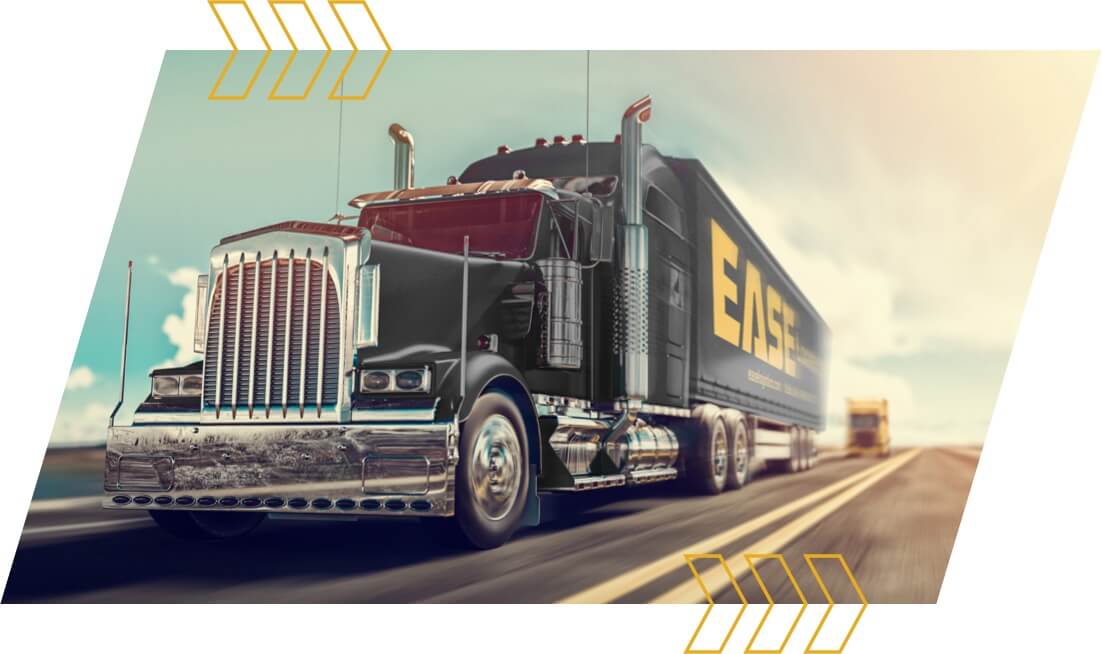
The automotive supply chain entered 2026 expecting stabilization. What it got instead was a return of volatility. Production strategies are shifting week to week as OEMs pivot between EV, hybrid, and ICE builds. Lead times are breaking down in ways that weren’t present during the post-chip recovery. And transportation costs are rising even as finished vehicle demand stays flat.
According to the EASE Automotive Freight Index Q1 2026, daily automotive freight volumes grew 2.8x year-over-year, from a baseline of 71 loads per day in March 2025 to 197 in March 2026. At the same time, Q1 2026 produced a single surge day more than double the largest spike in all of 2025. The environment is not just busier. It is less predictable.
For mid-market shippers, this is a more difficult environment to operate in than 12 months ago. This guide covers how automotive logistics works, why the current market conditions are putting pressure on JIT supply chains, what the Midwest and Southeast corridors look like in practice, and what to consider when evaluating a logistics partner.
What Is Automotive Logistics?
Automotive logistics is the planning and execution of freight movement that supports vehicle manufacturing: inbound components from suppliers to assembly plants, parts movement between Tier 1 and Tier 2 suppliers, sequenced deliveries aligned to production schedules, and outbound transport of finished vehicles.
The scale is significant. U.S. motor vehicles and parts manufacturing employed approximately 967,000 workers in 2025, spread across Ohio, Indiana, Michigan, Kentucky, Alabama, South Carolina, and Tennessee (Bureau of Labor Statistics, 2026). Every day, thousands of shipments move between those facilities on schedules that leave almost no room for error.
What separates automotive logistics from general freight is not size; it is consequence. A shipment of consumer goods that runs six hours late creates a service inconvenience. A parts shipment that misses a production window at an assembly plant running just-in-time inventory can halt a line that builds hundreds of vehicles per shift.
Why 2026 Is a Harder Year for Automotive Supply Chains
Three forces are converging in 2026 that make automotive freight management more difficult than the recent past.
Production strategy shifts. OEMs are navigating a pivot from aggressive EV expansion toward hybrid and ICE builds, driven by weaker-than-expected EV demand and regulatory uncertainty. The result is week-to-week schedule fluctuation at plants that previously operated with more predictable production cadences. When production schedules change, freight demand changes with them, and carriers that were adequate for the old schedule may not be positioned for the new one.
Lead time instability. The EASE Automotive Freight Index identifies lead time variability as one of the most significant drivers of transportation cost increases. When lead times break down, freight shifts to expedited and premium modes, and cost per load increases accordingly. Organizations without flexible carrier networks absorb those increases through the spot market.
Rising costs on flat demand. Finished vehicle sales are projected flat in 2026. Transportation costs are not. Diesel prices, tariff uncertainty, regulatory changes, insurance costs, and carrier exits are all pushing cost per load upward. The implication for mid-market shippers is margin compression: the freight bill is growing even when the volume isn’t.
February 2026 marked the first time the EASE CPM (cost per mile) for automotive freight crossed above market rate, signaling that capacity is repricing under stress (EASE Automotive Freight Index, Q1 2026). For shippers on contracted rates, that may not be visible yet. For shippers using spot procurement, it is already landing.
How Just-In-Time Freight Works in Automotive Manufacturing
Just-in-time manufacturing was developed to reduce inventory carrying costs and eliminate waste. Toyota formalized the model in the 1950s, and today it governs production at most North American assembly plants. JIT means delivering exactly what the plant needs, when it needs it, in the exact quantity required. There is no safety stock buffer.
The model works well when supply chains are predictable. When lead times become inconsistent, as they are now, the absence of buffer inventory means disruptions reach the production line faster and with less warning. A supplier who shipped reliably on a 4-hour cycle last year but is now showing 6-hour variability because of scheduling changes at their own facility creates immediate risk for the plant receiving their parts.
For mid-market shippers, this means the freight operation needs to be more proactive than it was during the 2024-2025 recovery period. Contingency infrastructure matters more. Real-time visibility matters more. The carrier relationships that worked when the market was stable may not be sufficient now that it isn’t.
What Managed JIT Freight Actually Requires
Managed JIT freight is a logistics model that treats delivery windows as production constraints, not transit time targets. It requires specific infrastructure that standard freight brokerage typically does not provide.
The components that matter:
Dedicated carrier assignments. Production routes should run on carriers who know the dock, the appointment system, and the receiving protocol at the plant. Carriers sourced from the spot market the day of the load do not have that knowledge.
Pre-built contingency plans. Given current lead time instability, the contingency plan should exist before the problem does. Backup carriers should be pre-qualified for the lane. Escalation protocols should be documented and tested.
Production-window tracking, not transit-time tracking. Real-time visibility is standard. What matters is whether alerts are configured to the production window threshold, not a generic delivery ETA. A shipment trending toward a 6am production window miss needs to trigger action at 3am, not at 5:45am.
24/7 operational coverage. Assembly plants run multiple shifts. The freight operation needs to cover them.
EASE’s managed JIT freight services are built around these requirements, grounded in the company’s roots in automotive line production.
Choosing an Automotive Logistics Partner in a Volatile Market
The evaluation criteria for an automotive 3PL are not fundamentally different than they were a year ago, but the stakes of getting it wrong are higher. In a stable market, a provider with adequate carrier coverage and decent contingency planning is sufficient. In the current environment, “adequate” is not the same as “reliable.”
When evaluating an automotive logistics partner, the questions that matter most in 2026:
Does their carrier network have depth in your specific lanes, not just your region? The routing guide deterioration visible in Q1 2026 data means primary carriers are less reliable than they were. A provider with three backup options per lane is better positioned than one with national coverage on paper but thin redundancy in practice.
How are they handling the production schedule volatility? EV-to-hybrid pivots are creating week-to-week fluctuation. A logistics partner who knows about a schedule change at your plant the same day you do is not providing an advantage. One whose carrier relationships and contingency infrastructure can respond to same-day changes is.
What does their expedited capability look like? With lead time instability driving increased expedited spend across the industry, having a provider whose expedited option is “we’ll call someone” is materially different from one with dedicated expedited freight services.
Are their technology tools built for production windows or generic transit? The AMMI platform at EASE is configured for automotive production requirements, not standard freight benchmarks. That distinction matters when a window miss is measured in minutes, not hours.
For a broader view of integrated logistics solutions for mid-market shippers, EASE covers truckload, LTL, intermodal, and managed options across industries including automotive, manufacturing, and food and beverage.
The Midwest and Southeast Automotive Corridors in 2026
The geography of U.S. automotive manufacturing has not changed, but the freight conditions within each corridor have shifted.
The Midwest Corridor
Ohio, Indiana, Michigan, and Kentucky concentrate the largest share of North American automotive production. Ohio anchors the corridor with Honda’s Marysville operations, employing approximately 64,900 workers in motor vehicle parts manufacturing in 2025 alone (BLS, 2026). Indiana leads the U.S. in motor vehicle bodies and trailers employment. Michigan houses the domestic automaker headquarters and a dense Tier 1 supplier network.
The Ohio-Indiana-Michigan triangle is among the highest-volume JIT freight corridors in North America, and it is also where production volatility is most acutely felt. When GM adjusts a Fort Wayne schedule or Honda shifts a Marysville production sequence, the freight ripple touches dozens of Tier 1 and Tier 2 suppliers within a 200-mile radius.
EASE’s operations are anchored in central Ohio, with facilities in Marysville and East Liberty positioned directly within the Honda supply network. EASE is also running automated trucking programs on the I-70 corridor between Columbus and Indianapolis. For more on Ohio’s logistics infrastructure specifically, the post Why Ohio Should Be Part of Your Supply Chain Strategy covers the state’s geographic and infrastructure advantages.
The Southeast Corridor
Alabama, Tennessee, South Carolina, and Georgia form the second major corridor, built around international OEM investment. BMW’s Spartanburg plant produced 416,301 vehicles in 2024, making it the U.S.’s largest automotive exporter by value for the ninth consecutive year (BMW Group, 2024). Mercedes-Benz, Honda, Hyundai, Toyota, Volkswagen, and Mazda all operate assembly facilities across the corridor.
The Southeast presents different freight conditions than the Midwest: a tighter carrier market for automotive-specific loads, longer distances from Midwest supplier networks, and plant-receiving protocols that vary significantly by OEM. A provider that covers the Midwest well but relies on general capacity for Southeast lanes creates asymmetric risk for suppliers serving both regions.
How the Q1 2026 Data Should Shape Your Freight Strategy
The EASE Automotive Freight Index draws a direct line between the current market environment and what organizations need to do differently. The summary is worth taking seriously: the automotive supply chain has moved from a recovery phase into a recalibration phase. Production variability, supplier inconsistency, and rising transportation costs are not occurring as isolated events. They are reinforcing one another.
The practical implications for mid-market shippers:
- Plan for production variability, not production stability. Schedules that change week to week require freight infrastructure that can adapt without reverting to expensive spot procurement.
- Build carrier network redundancy. Routing guide deterioration means primary carrier reliability has decreased. Backup carriers need to be pre-qualified, not just identified in a crisis.
- Align transportation strategy to real-time production data. The competitive advantage in 2026 is response capability, not cost optimization. That requires visibility tools connected to production schedules, not standard delivery tracking.
Automotive Logistics FAQs
What is automotive logistics?
Automotive logistics is the coordination and execution of freight movement across the automotive supply chain, including inbound parts delivery to assembly plants, supplier-to-plant transportation, and outbound vehicle distribution. For mid-market shippers, it primarily means managing the inbound supply that feeds OEM and Tier 1 production schedules, where delivery windows are measured against production sequences rather than standard transit times.
How is automotive freight different from general freight?
The defining difference is tolerance for delay. General freight operations typically carry buffer inventory that can absorb a late delivery. Automotive plants running just-in-time production carry hours of parts inventory. A missed delivery window can stop a production line. The logistics infrastructure required to prevent that, including dedicated carriers, contingency protocols, and production-window tracking, is structurally different from standard freight brokerage.
Why are automotive freight costs rising in 2026?
According to the EASE Automotive Freight Index Q1 2026, several forces are converging: diesel prices, tariff uncertainty, insurance costs, carrier exits, and regulatory changes are all pushing cost per load upward. This is occurring against a backdrop of flat finished vehicle demand, meaning shippers are facing margin compression rather than cost increases offset by volume growth. Lead time instability is also shifting more freight into expedited modes, which carry higher cost structures.
What should I look for in an automotive logistics provider in 2026?
Given current market conditions, carrier network redundancy, contingency infrastructure, and same-day responsiveness to production schedule changes matter more than they did 12 months ago. Technology that provides production-window visibility rather than generic delivery tracking is also more important as volatility increases. The specific questions to ask are covered in the cluster piece What to Look for in an Automotive Logistics Partner.
Does EASE serve both the Midwest and Southeast corridors?
Yes. EASE operates from central Ohio, with logistics facilities in Marysville and within the Honda supply network, and carrier relationships covering the Southeast plants in Alabama, Tennessee, South Carolina, and Georgia.
Talk to an Automotive Freight Specialist
If the current market conditions are putting pressure on your production lanes, a freight assessment from a provider who works specifically in automotive logistics is worth the conversation.
 ?
?